Printed Menu or Tabletop Screen? Choosing a Dining Format
Choose a printed menu or tabletop screen by matching the format to meal pace, guest needs and the detail diners need before they order.
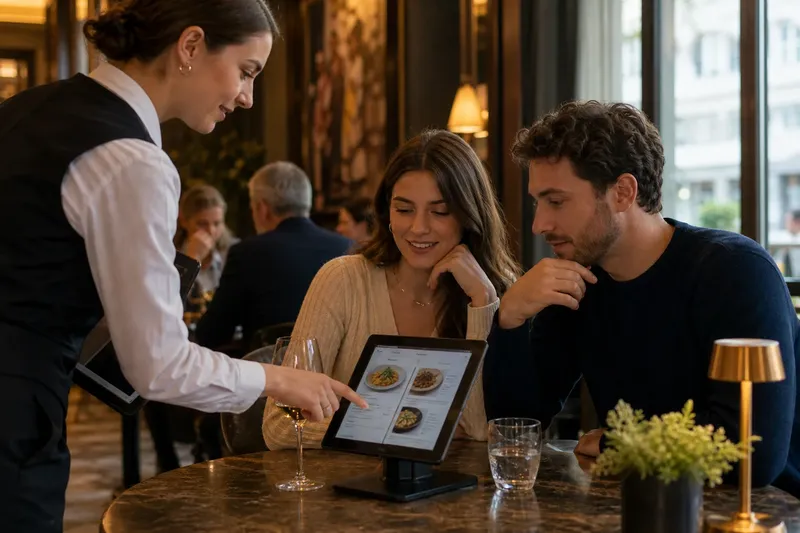
A printed menu or tabletop screen changes how guests make decisions, not just where they read the dishes. A paper menu suits a meal that should unfold through conversation; a screen can bring changing details or several choices within reach. The better format is the one that fits the service rhythm and the information diners need at that moment.
That choice matters in a hotel restaurant, a casino dining room or a neighbourhood café. Guests may be settling in for a long dinner, choosing quickly before a show, or asking about ingredients while a busy team handles several tables. A useful decision starts with those circumstances rather than with a preference for paper or technology.
Start with the pace of the meal
Think about when guests need to choose and how the menu fits into the rest of the visit. A leisurely meal gives diners time to browse, ask questions and return to a dish they noticed earlier. A printed menu makes that easy: it stays visible on the table, can be shared without handing over a device and does not ask a guest to learn an interface.
At a counter-service venue or a restaurant serving guests on a tight schedule, a tabletop screen may help people inspect options before speaking with staff. It can present a large menu in manageable groups and make certain details available without a waiter needing to recite them. Yet a screen can also interrupt a relaxed meal if its controls invite repeated tapping or its display competes with conversation.
Watch the natural pauses in service. If guests usually order soon after sitting down, keep the first decision easy to see. If they tend to linger over dessert and drinks, consider whether the format lets them revisit those choices without summoning staff or searching through several screens.
Match the format to the information guests need
A menu should answer practical questions as well as make dishes appealing. Some dining rooms can explain their offer in a few clear lines. Others need to show a broad selection, rotating specials, several languages, or detailed notes about ingredients and preparation. Digital menus can accommodate layered information, but only if guests can find it quickly. Printed menus are strongest when the essential details can be presented clearly at a glance.
For food allergies and dietary requirements, clarity matters more than format. A screen may provide space for ingredient notes or a visible route to ask for help; a printed menu may make a concise set of symbols easier to scan. Neither format replaces a direct conversation when a guest needs a reliable answer about a dish. Keep the menu wording consistent with what the kitchen and service team can explain.
Consider reading comfort, too. Small type, glare and low contrast can make a screen tiring. A paper menu can also fail if its type is cramped or its pages are difficult to handle. Guests should be able to read the menu comfortably without having to guess which option is selected or ask for help simply to move between categories.
Use the week to assess the dining room
A short review over a normal service week can reveal whether the format suits the meal. The aim is not to collect elaborate data. It is to notice where guests hesitate, what they ask staff to clarify, and whether the menu remains useful as service changes from one part of the day to another.
- At the start of the week, observe arrival and ordering. Notice whether guests can find the menu promptly, understand where to begin and make a choice without being rushed.
- During a busy service, listen for repeated questions. If diners often ask what comes with a dish or which items are available, consider whether that information belongs directly on the menu.
- On a quieter service, watch how guests browse. See whether they share a menu, return to a drinks list or ask to see the dessert choices after the main course.
- Check the practical handling. For print, look for pages that are hard to read, clean or replace. For screens, notice glare, awkward navigation and whether devices are ready when needed.
- At the end of the week, compare needs by meal period. Decide whether one format works throughout the day or whether breakfast, lunch and dinner call for different approaches.
Keep the review grounded in observations rather than assumptions about what guests prefer. A pause before ordering might mean that the menu is confusing, but it could also mean that diners are waiting for a companion. Ask a brief, neutral question when it feels natural, and let the answer inform a decision rather than treating one comment as a rule for everyone.
Choose a format that supports service, not just display
Printed menus need a dependable routine for editing, checking and replacing copies. A change to a dish or an unavailable item can leave paper out of date until staff remove or amend the menu. That may be manageable for a stable offer, but less convenient for a kitchen that changes dishes often. Clear ownership helps: someone should know which version is current and when a revised menu reaches the dining room.
Tabletop screens shift some of that work into content management and device upkeep. Staff need to know how to find a dish, explain the menu’s structure and respond if a screen is unavailable. A digital format can make updates easier to publish, but it does not make the information accurate by itself. Changes still need to be checked against the kitchen’s offer.
Also consider the atmosphere. A quiet, intimate dining room may benefit from uncluttered tables and the familiar feel of paper. A large venue with several food counters may value a format that can show different menus in one place. In either setting, avoid making the device the centre of the meal. It should help guests decide and then recede.
When should a restaurant choose print or a screen?
Is a printed menu better for a relaxed dinner?
It can be, especially when guests browse together and the menu changes infrequently. Paper remains available without a device and supports conversation across the table.
Does a tabletop screen suit a fast meal?
It may suit a quick ordering process when categories are easy to scan and the next action is obvious. If guests must work through several screens before seeing the essentials, the format can slow them down instead.
Which format works better for frequent menu changes?
A digital menu can be more convenient to update, provided someone checks that the displayed offer matches what the kitchen is serving. A printed menu can still work when changes are uncommon and staff have a clear way to communicate an exception.
Should a restaurant offer both formats?
A choice can help diners with different preferences, but it adds work: the information must stay consistent across paper and screen. Offer both only if the team can maintain each version and explain how guests can use them.
Try a small change before replacing the whole menu
Say a hotel dining room serves a slow evening meal and a quick lunch for guests leaving on excursions. Imagine the manager notices that dinner guests share paper menus comfortably, while lunch diners repeatedly ask for the current soup and sandwich options. The manager could keep the printed dinner menu and introduce a simple tabletop screen for lunch specials, then observe whether guests can find those choices easily and whether staff can keep the display current. The expected observable result is a clearer picture of which format fits each service, not a predetermined answer.
A limited trial also gives the team a chance to check the wording, placement and staff explanation before making a wider change. Keep the alternatives straightforward: a printed menu, a screen, or different formats for distinct meal periods. If local accessibility requirements or a manufacturer’s instructions affect the choice or use of a device, check those once before deciding.
Choosing between a printed menu and a tabletop screen is ultimately a decision about the meal guests are having. Match the format to its pace, make essential information easy to find, and give staff a workable way to keep it accurate. A menu succeeds when diners can turn from choosing to enjoying their food without the format becoming another task.